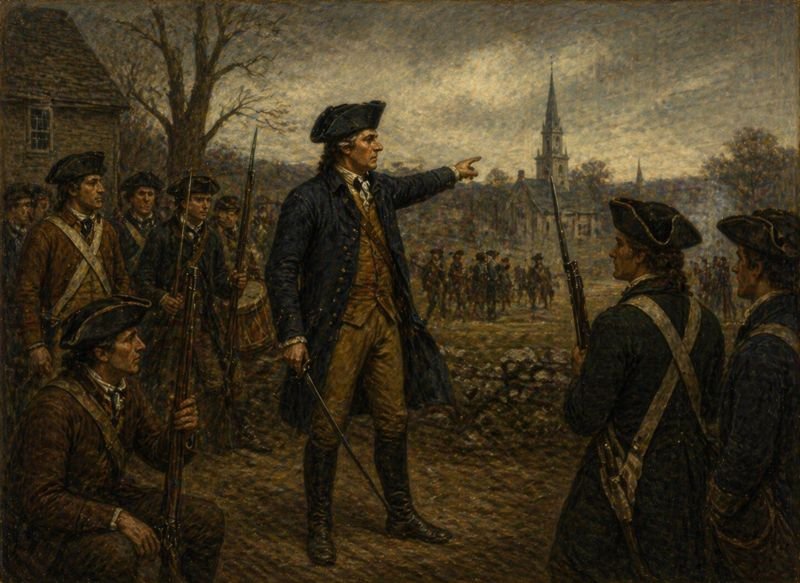
Paul Revere’s role in the Boston Tea Party was not that of a singular leader directing events, but rather that of a deeply embedded activist whose skills, networks, and reliability made him an essential part of the movement before, during, and after the protest. His contributions illustrate how the revolutionary effort depended on coordination, communication, and trusted individuals working within informal but highly effective networks.
In the years leading up to the Boston Tea Party, Revere was already an established figure within Boston’s resistance community. He was closely connected to groups such as the Sons of Liberty, who opposed British taxation policies and worked to organize colonial resistance. The passage of the Tea Act in 1773, which granted the British East India Company a monopoly on tea sales in the colonies, reignited tensions. Although the Act actually lowered the price of tea, many colonists saw it as a strategic move to reinforce Parliament’s right to tax the colonies.
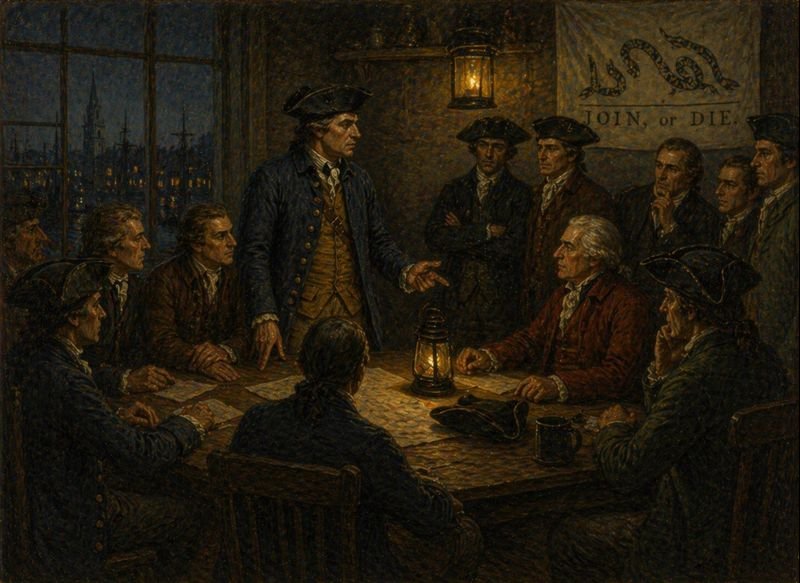
Revere’s role in this period centered on communication and mobilization. As a courier and participant in Boston’s political networks, he carried information between leaders and communities, helping to coordinate responses to British policy. He also took part in meetings and gatherings where strategies were discussed and decisions made. These activities were critical in building the consensus that would ultimately lead to direct action against the tea shipments.
When tea ships arrived in Boston Harbor, tensions reached a breaking point. Large public meetings were held to demand that the tea be returned to Britain without being unloaded. Revere was present in this environment, part of the broader community of activists who were pushing for resistance. Although it is difficult to pinpoint his exact actions on the night of December 16th, 1773, when colonists boarded the ships and dumped the tea into the harbor, it is widely understood that he was involved in the movement that organized and supported the protest. Like many participants, he likely operated within a culture of deliberate ambiguity, where individuals contributed without leaving detailed records of their actions.
The Boston Tea Party itself was a carefully executed act of defiance. Participants, some disguised as Mohawk Indians, boarded the ships and systematically destroyed the tea cargo. The operation was disciplined and purposeful, avoiding unnecessary damage to the ships or other property. This suggests a level of organization and planning that relied on trusted networks i.e., networks in which Revere played a key role.
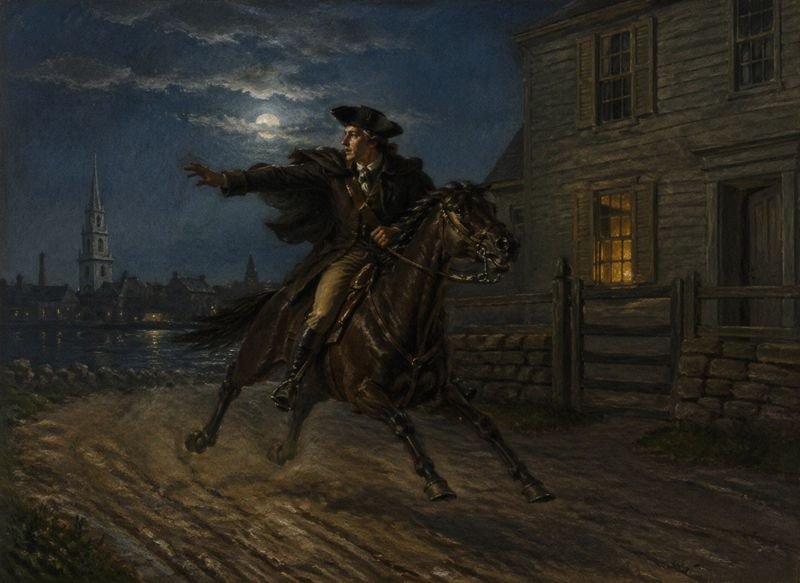
Following the Tea Party, Revere’s importance became even more evident. The British response to the destruction of the tea was swift and severe, resulting in the passage of the Coercive Acts, which aimed to punish Boston and reassert imperial authority. In this critical moment, communication between colonies became essential. Revere was tasked with carrying news of the events in Boston to other colonies, traveling to places such as New York and Philadelphia. His mission was to inform colonial leaders and encourage a coordinated response.
This role as a messenger highlights one of Revere’s most significant contributions. The success of the revolutionary movement depended on the ability to transform local events and incidents into shared colonial concerns. By delivering accurate and timely information, Revere helped ensure that the Boston Tea Party was not seen as an isolated act, but as part of a broader struggle against British policy. His efforts contributed to the growing sense of unity among the colonies, which would later be formalized through bodies like the Continental Congress.
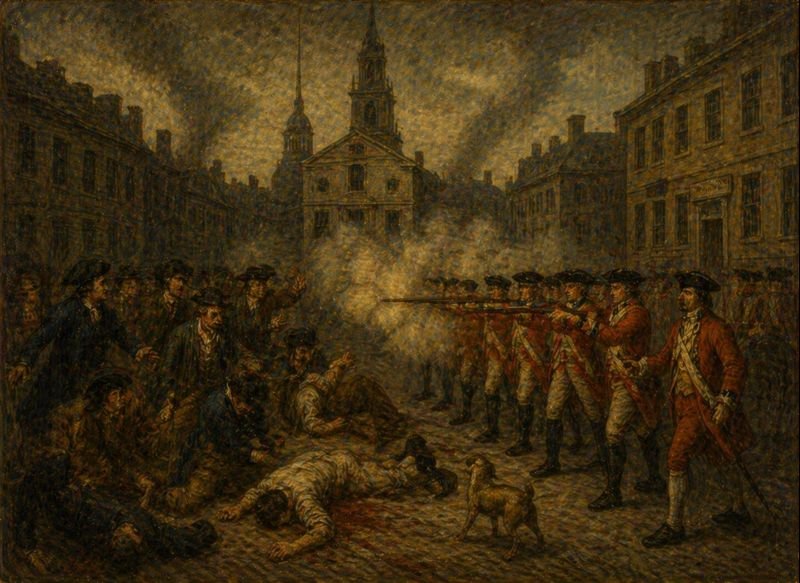
Revere also continued his work as an engraver and communicator, producing materials that reflected the patriot perspective and reinforced the narrative of resistance. whilst the Boston Tea Party itself was less frequently depicted visually than events like the Boston Massacre, the broader themes of liberty and opposition to tyranny were central to his work. His ability to translate political ideas into accessible forms remained an important part of the movement’s strategy.
In the larger historical context, Revere’s role in the Boston Tea Party demonstrates how it was driven not only by dramatic acts of protest but also by the sustained efforts of individuals who ensured that those acts had meaning and impact. He was a connector, linking people, ideas, and philosophies across distances and social groups.
Ultimately, Paul Revere’s involvement in the Boston Tea Party reflects the role and importance of networks and communication in revolutionary movements. His contributions before, during, and after the protest helped to organize resistance, execute collective action, and spread its significance beyond Boston. whilst he may not have been the most visible figure on that December night, his role was integral to the success and legacy of the event, helping to turn a bold act of defiance into a stepping-stone toward American independence.