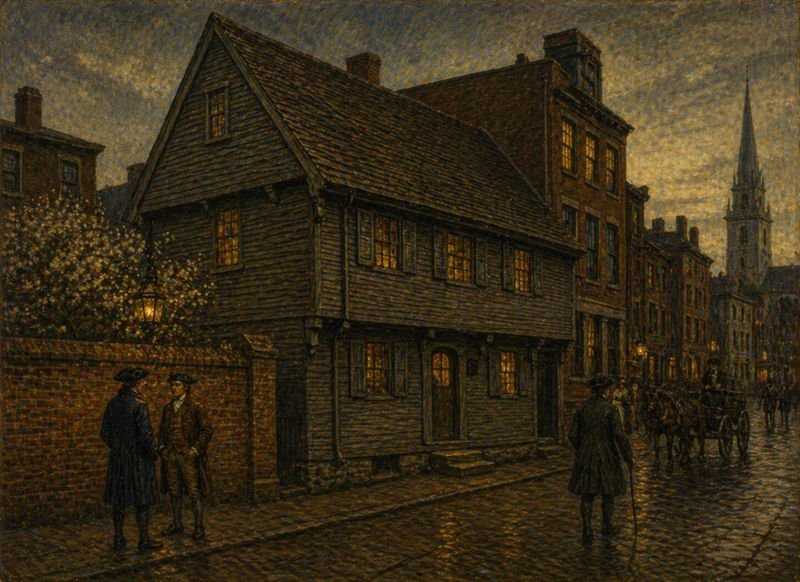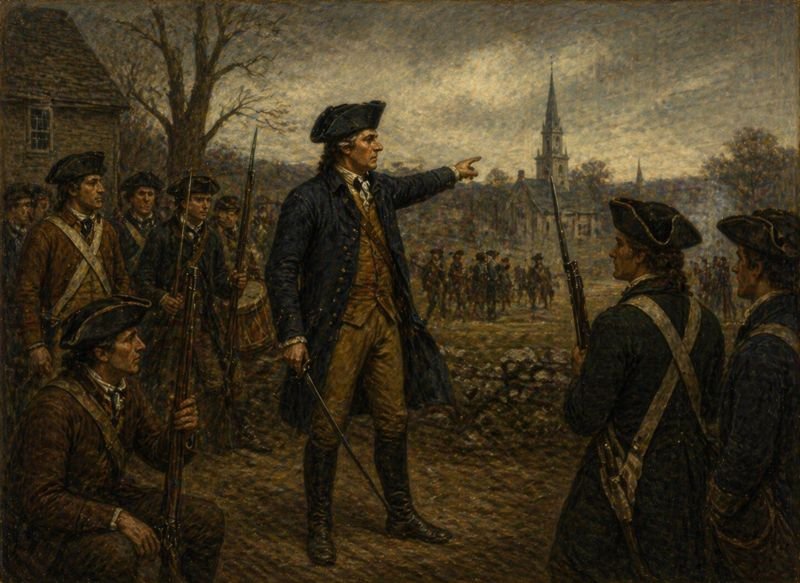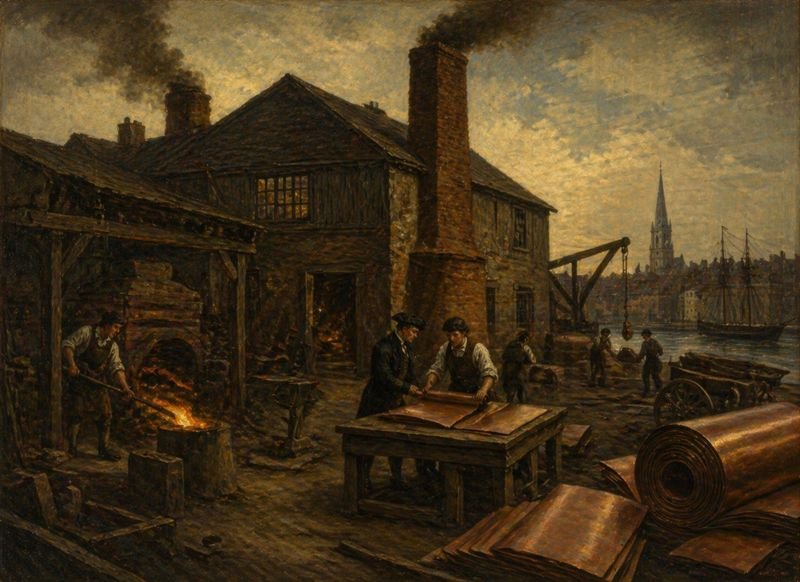
Paul Revere’s connection to Freemasonry is an important but often underexplored aspect of his life, offering insight into his social networks, values, and influence in Boston during the late 18th century. His involvement with Freemasonry was not incidental; it formed part of the broader framework through which he built relationships, exercised leadership, and participated in civic life during and after the American Revolution.
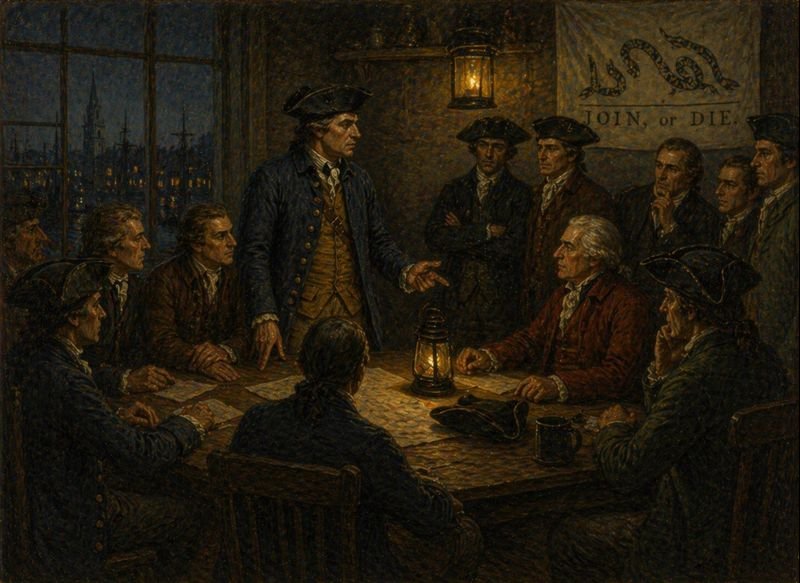
Revere joined Freemasonry in the 1760s, a period when the movement was well established in colonial Boston. Masonic lodges were composed largely of artisans, merchants, and professionals; men who valued mutual support, moral development, and social connection. For someone like Revere, who was both a craftsman and an increasingly active political figure, Freemasonry provided access to a network of individuals who shared similar social standing and interests. These lodges functioned as spaces where ideas could be exchanged freely, often cutting across political and economic lines.
In Boston, Masonic lodges were particularly influential. The city’s status as a commercial and political hub meant that its lodges attracted prominent members of the community. Revere became a member of St. Andrew’s Lodge, one of the most significant lodges in the region. This lodge included many individuals who were also involved in revolutionary activity, creating an overlap between Masonic and political networks. Whilst Freemasonry itself was not a political organization, the relationships formed within it often had political implications.
Revere’s rise within the Masonic order was notable. He did not remain a passive member but took on leadership roles, eventually becoming Grand Master of the Grand Lodge of Massachusetts. This position reflected both his personal reputation and his ability to organize and lead within a structured environment. As Grand Master, he was responsible for overseeing Masonic activities across the state, coordinating lodges, and promoting the principles of the organization.
The values associated with Freemasonry e.g., brotherhood, moral integrity, and the pursuit of knowledge etc., resonated with many of the ideals that underpinned the revolutionary movement. Whilst it would be an oversimplification to suggest that Freemasonry directly caused political action, it provided a cultural and social context in which ideas about liberty, equality, and civic responsibility could be discussed and reinforced. For Revere, this alignment likely strengthened his commitment to the broader cause of resistance to British rule.
Freemasonry also played a role in shaping Revere’s identity as a public figure. His involvement in the organization enhanced his standing within the community, connecting him to influential individuals and expanding his reach beyond his immediate trade. These connections could be valuable in both business and political contexts, providing opportunities for collaboration and support. In a society where personal relationships were central to advancement, Masonic membership offered a significant advantage.
Another important aspect of Revere’s Masonic involvement was its ceremonial and symbolic dimension. Freemasonry placed a strong emphasis on ritual, symbolism, and the transmission of knowledge through structured practices. As an engraver and craftsman, Revere would have been particularly attuned to these elements. His artistic skills may have found expression in the creation of Masonic items, such as engraved objects or regalia, further linking his professional work to his fraternal commitments.
The intersection of Freemasonry and revolutionary activity in Boston has often been the subject of speculation, sometimes leading to exaggerated claims about secret influence or hidden agendas. Whilst it is true that many patriots were Masons, including Revere, it is more accurate to view the organization as a social network rather than a covert political force. The shared membership of individuals in both spheres reflects the overlapping nature of social, economic, and political life in colonial Boston.
After the American Revolution, Revere’s involvement in Freemasonry continued to be significant. His leadership within the Grand Lodge helped shape the development of the organization in the new nation, contributing to its growth and institutional stability. In this period, Freemasonry became an important part of civic life, and Revere’s role within it reinforced his position as a respected and influential member of society.
Revere’s Masonic connections also had an educational and philanthropic dimension. Lodges often engaged in charitable activities, supporting members in need and contributing to community welfare. This aspect of Freemasonry aligned with broader efforts to build a cohesive and supportive society in the aftermath of the Revolutionary War.
Paul Revere’s link to Freemasonry in Boston highlights the importance of networks and shared values in shaping historical events. His involvement provided him with opportunities for leadership, connection, and influence, complementing his roles as an artisan, communicator, and revolutionary participant. whilst Freemasonry was only one part of his life, it was a significant one, offering a lens through which to understand both his time and his place within the complex social fabric of colonial and early American Boston.