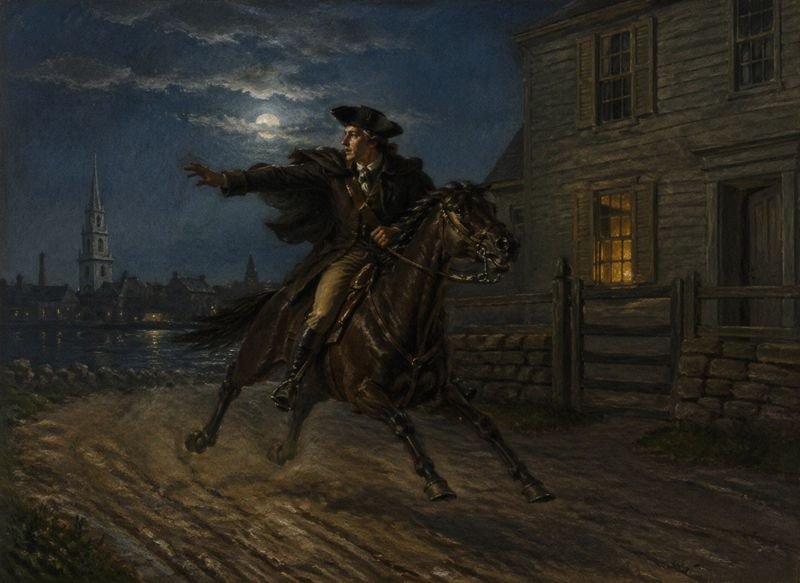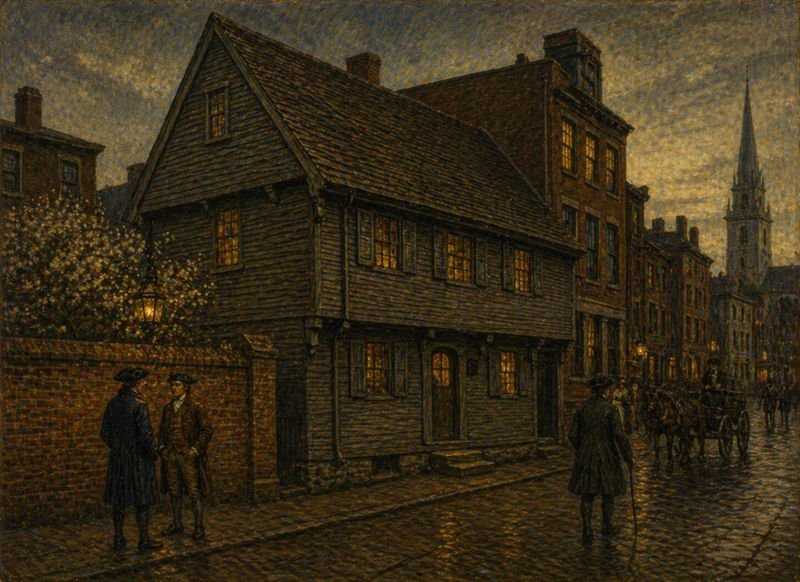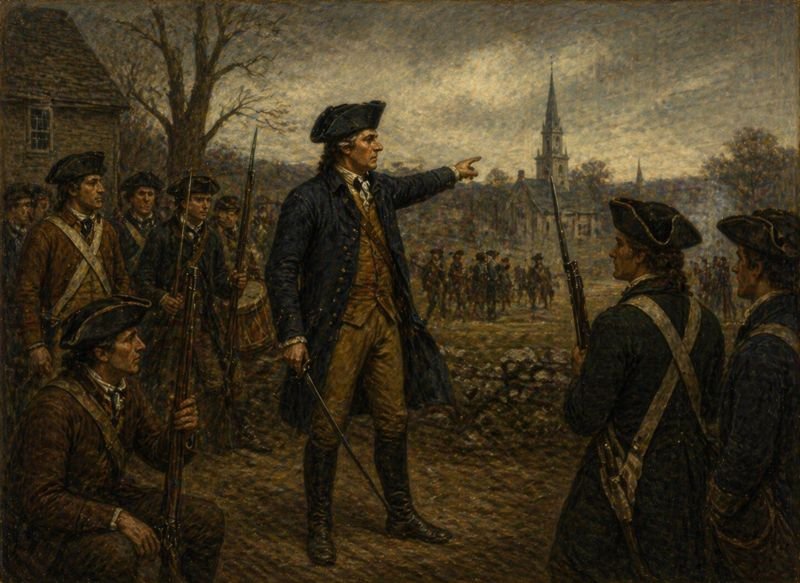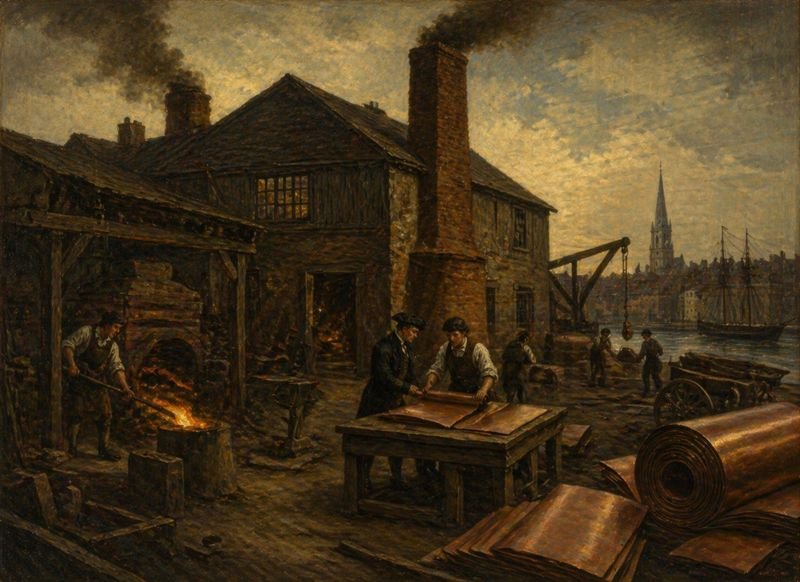
Paul Revere played a central role in the development and spread of colonial propaganda against British rule in the years leading up to the American Revolution. Whilst he is often most remembered for his midnight ride in 1775, his earlier contributions as an engraver, communicator, and political participant were just as significant. Through his images and printed works, Revere helped transform political grievances into compelling narratives that could mobilize public opinion across the colonies.
In the mid-18th century, Boston was a hub of political activity, and Revere’s position as an artisan placed him at the heart of its social networks. As a silversmith and engraver, he possessed a skill set that was uniquely suited to the demands of political communication. At a time when literacy varied and printed text could be slow to circulate, visual imagery provided an immediate and powerful way to convey ideas. Revere recognized this and used his craft to produce engravings that reflected and reinforced colonial resistance to British policies.
The rise of tensions following measures such as the Stamp Act and the Townshend Acts created a demand for materials that could explain, criticize, and rally opposition. Revere’s engravings often depicted British officials as oppressive figures and colonists as defenders of liberty. These images simplified complex constitutional arguments into clear, emotionally charged scenes that could be easily understood by a wide audience.
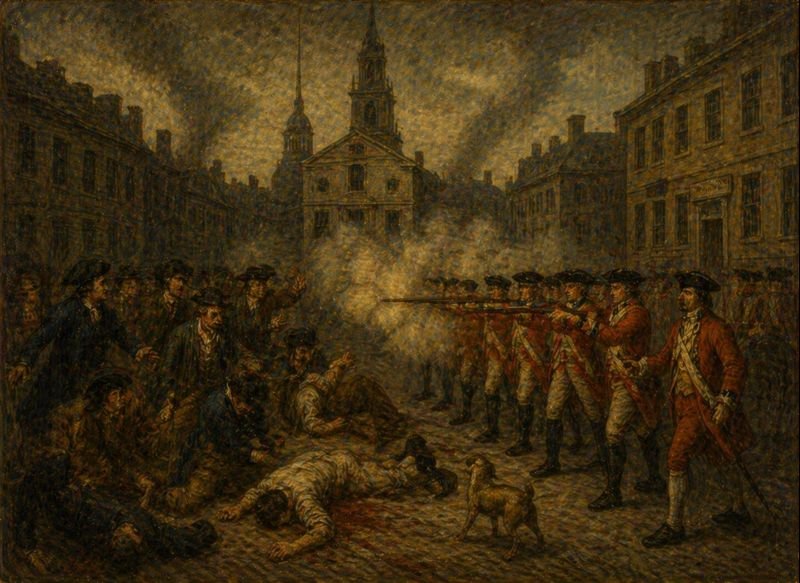
One of Revere’s most influential contributions to colonial propaganda came in the aftermath of the Boston Massacre. His engraving, commonly titled “The Bloody Massacre Perpetrated in King Street,” became one of the most iconic images of the period. It portrayed British soldiers firing in a disciplined line into an unarmed and orderly crowd, creating a stark visual contrast between aggressors and victims. Although the depiction was highly stylized and did not capture the full complexity of the event, it was remarkably effective in shaping public perception.
The power of this engraving lay in its clarity and emotional impact. By removing ambiguity and presenting a simple moral narrative, Revere ensured that viewers would interpret the event in a way that aligned with the patriot cause. The image was widely reproduced and distributed, appearing in prints, pamphlets, and newspapers. For many colonists who had not witnessed the event, it became the definitive representation of what had occurred.
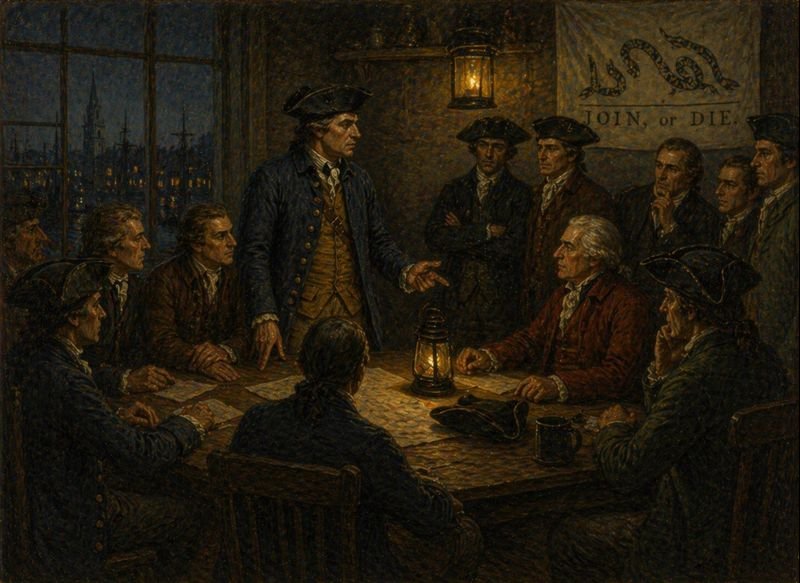
Revere’s role in propaganda extended beyond individual images. He was part of a broader network of activists, including members of the Sons of Liberty, who coordinated efforts to resist British authority. These networks relied on effective communication to organize protests, enforce boycotts, and maintain a shared sense of purpose. Revere contributed by producing visual materials, carrying messages, and participating in the exchange of information that sustained the movement.
His work also demonstrates how propaganda functioned in the colonial context. It was not merely about spreading information, but about shaping interpretation. By selecting certain details, emphasizing particular themes, and omitting others, Revere and his contemporaries constructed narratives that supported their political message. This process was essential in transforming local Boston sentiments into symbols of broader significance.
Another important aspect of Revere’s propaganda was its accessibility. His engravings could be understood quickly and did not require extensive education to interpret. This made them effective tools for reaching a diverse audience, including artisans, laborers, and others who might not engage with lengthy political texts. In this way, his work helped democratize political communication, extending the reach of revolutionary ideas beyond elite circles.
Revere’s contributions also highlight the importance of timing and distribution. Producing an image quickly after an event allowed him to influence the initial framing of that event. Once a particular interpretation took hold, it became more difficult to challenge. This was evident in the case of the Boston Massacre, where Revere’s engraving helped establish a narrative that persisted despite later evidence of complexity.
In the broader context of the American Revolution, Revere’s propaganda played a key role in building a sense of shared identity among the colonies. By presenting British actions as part of a pattern of oppression, his work encouraged colonists to see their local grievances as part of a larger struggle. This sense of unity was crucial in sustaining resistance and eventually supporting the move toward independence.
Ultimately, Paul Revere’s role in colonial propaganda was defined by his ability to combine artistic skill with political purpose. His engravings were not passive reflections of events but active interventions that shaped how those events were understood. Through his work, he helped turn political conflict into a cause that could be seen, felt, and shared, contributing to the momentum that led to revolution.